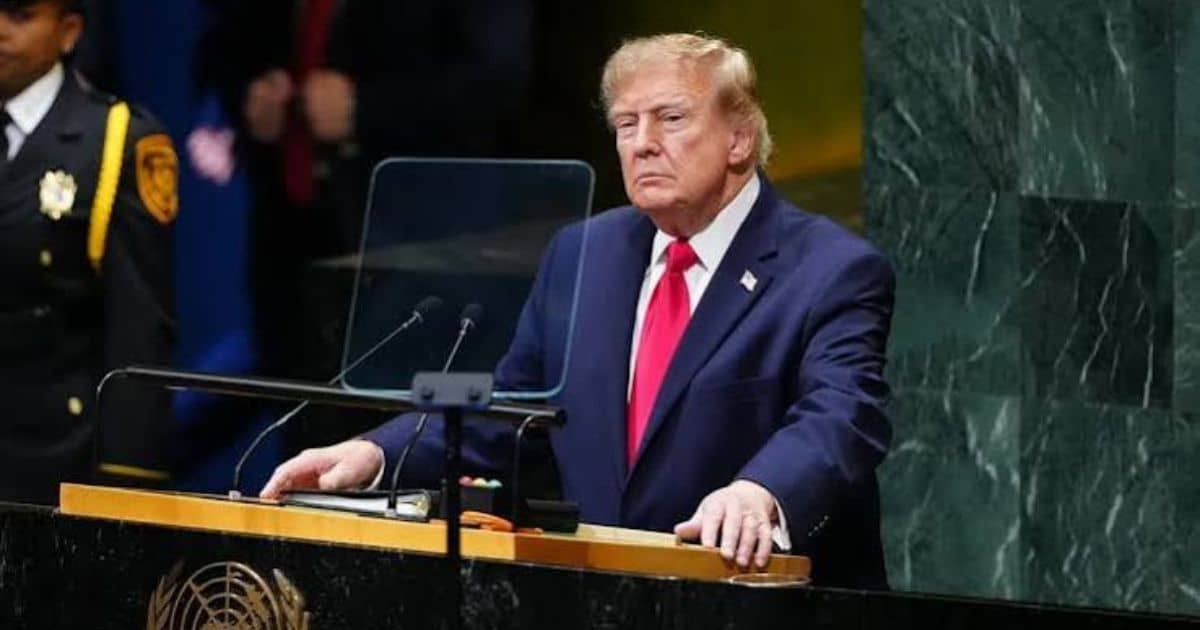
US President Donald Trump during a recent address. (Photo: Edited by BDUS News 24)
President Donald Trump (Age: 80, born June 14, 1946) has initiated a rare and controversial political maneuver from Washington, D.C., aiming to cancel nearly $1 billion in federal funding previously approved by Congress. The White House announced this major policy shift on Friday, drawing immediate nationwide attention and fierce debate among lawmakers.
President Trump to Commemorate 25th Anniversary of 9/11 Attacks at the Pentagon.
The administration’s primary goal with these cuts is to eliminate government spending that officials argue does not directly benefit American taxpayers. While supporters praise the decisive action to curb government waste, critics from both political parties have raised serious legal and constitutional concerns regarding the executive branch’s authority over the federal budget.
Targeting Immigrant Services and Diversity Initiatives
Impact on Trump $1B spending cuts and Federal Programs
The vast majority of the newly announced funding cuts target programs managed by the Health and Human Services (HHS) Department. Specifically, these cuts affect services designated for noncitizens, including refugees, asylees, and unaccompanied minors. The administration contends that these initiatives are excessive, especially given the success of recent border security enforcement.
Additional budget reductions impact various specialized sectors. These include HHS research focused on gender-affirming care, a Justice Department office dedicated to mitigating racial tensions, minority business development initiatives, and international debt relief programs linked to climate change investments.
Bipartisan Backlash and Legislative Concerns
Political Reactions in Washington
The timing and execution of the announcement have left lawmakers with very few options to counter the cuts. With the current fiscal year rapidly ending and the House of Representatives already adjourned until after the upcoming November elections, standard 45-day congressional review periods are practically bypassed.
Republican Senator Susan Collins, who serves as the chair of the Senate Appropriations Committee, strongly criticized the Office of Management and Budget (OMB) for acting without prior consultation. She labeled the decision an infringement on Congress’s constitutional power of the purse and pledged to investigate lawful responses.
Meanwhile, other conservative lawmakers, such as Senator Rick Scott of Florida, strongly defended the executive action, commending the administration for delivering essential savings to the American public. Legal experts note that while previous similar maneuvers faced court scrutiny, the final outcome of this domestic spending rollback remains uncertain.