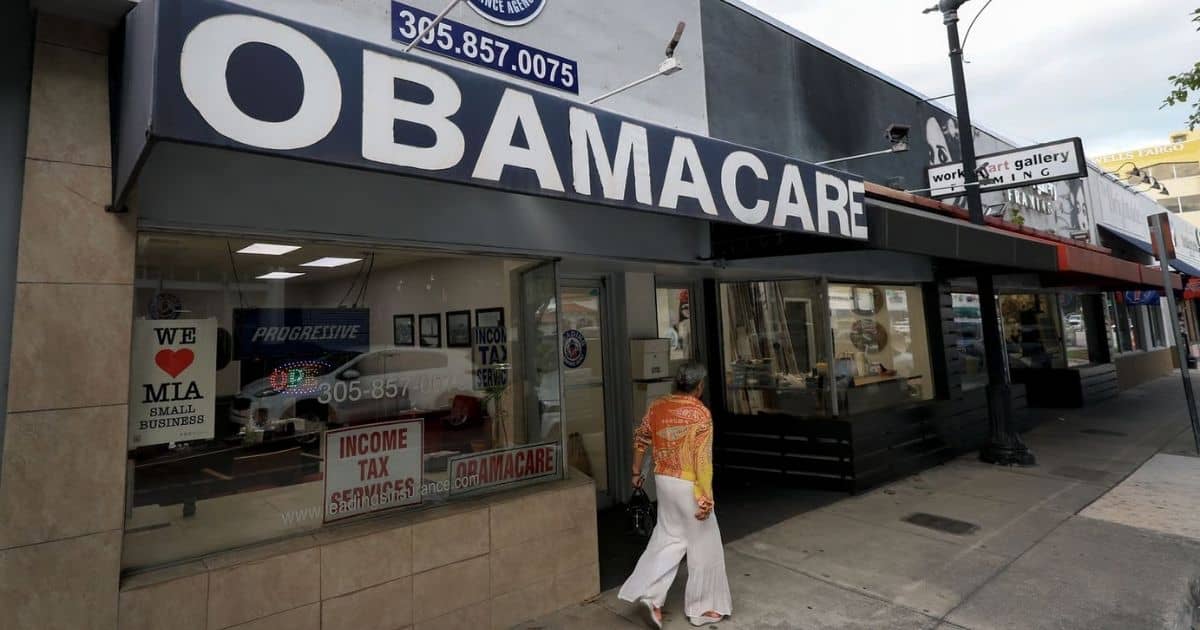
An Obamacare enrollment and service office. (Photo: Collected / qz.com / Edited: BDUS News 24)
President Donald Trump (age 80) announced that the federal government is issuing Trump $500 Obamacare refund checks to nearly one million citizens across 30 states. According to the Treasury Department, this financial initiative is designed to return what the administration characterizes as excess user fees collected through the Affordable Care Act’s federal exchange during the prior administration.
More than 950,000 eligible Americans are set to receive official Treasury checks accompanied by a personalized letter bearing President Trump’s signature. The White House noted that health insurance companies previously paid steep user fees to operate HealthCare.gov, costs that were ultimately passed down to everyday consumers through inflated monthly premiums, creating a financial surplus that was never returned.
Who Qualifies for the $500 Refund?
Eligibility for the refund program is specifically targeted at individuals who did not receive government-funded premium assistance under the Affordable Care Act. This means recipients paid the complete cost of the higher premiums out of pocket. Furthermore, the program is restricted to the 30 states utilizing the federal health insurance exchange rather than managing independent state marketplaces.
Most recipients fall within earning thresholds around 400% of the federal poverty line, representing roughly $64,000 annually for a single filer or up to $132,000 for a four-person household. The 30 states included in the distribution span across the country, featuring states such as Florida, Texas, Ohio, North Carolina, Arizona, and Missouri.
Trump $500 Obamacare refund checks
The timing of this announcement arrives just five weeks ahead of the upcoming midterm elections. Healthcare costs and affordability have remained central topics of political discussion, particularly following the expiration of enhanced ACA subsidies at the end of 2025. As the federal healthcare marketplace continues to experience contractions and adjustments, this direct refund initiative aims to return funds directly to American households.