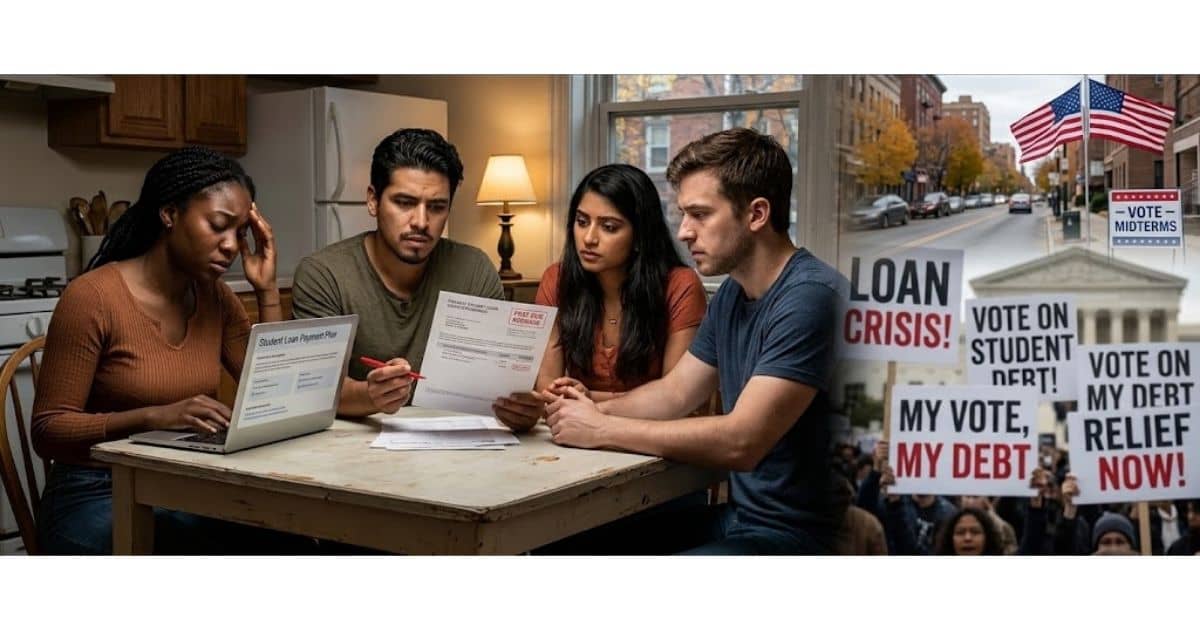
Student-loan borrowers facing financial stress over monthly payments ahead of US midterm elections.(Graphic Edit: BDUS News 24)
As the midterm elections approach, millions of Americans are grappling with intense financial pressures centered around the cost of everyday life. Among the hardest hit are student-loan borrowers, who are facing an uphill battle to afford their newly restructured monthly payments amidst broader economic challenges like high inflation, grocery costs, and energy bills.
A prime example is Sarah Bundy, a 55-year-old borrower who has spent nearly three decades dealing with student loan debt. Having originally borrowed $39,000 in the mid-1990s before dropping out, her balance has now ballooned to $60,000. Like many others transitioning off the Biden-era SAVE plan, she worries that the resumption of aggressive collection measures and higher bills will push vulnerable Americans further into financial distress.
Rising Delinquency Rates and Political Backlash Over Student Loans
According to data from Federal Student Aid, roughly one in every six adult Americans carries federal student loan debt. Furthermore, an analysis by the Urban Institute revealed that about 16% of federal and private borrowers were 60 or more days late on their payments. With a staggering 9.3 million borrowers in default and an additional 1.5 million in late-stage delinquency as of mid-2026, the total defaulted student-debt load sits at approximately $234 billion.
This financial squeeze is heavily impacting competitive political races. Battleground regions and swing states—such as Texas and Ohio—are reporting non-payment rates well above the national average. For instance, districts like Texas’s 34th District are seeing delinquency rates soar as high as 28%. Consequently, economic concerns are reshaping political loyalties, with some voters expressing deep frustration over unmet campaign promises regarding financial relief.
Policy Shifts, Treasury Transfers, and the Fight for Borrower Protection
The landscape of federal student debt is undergoing significant administrative changes under Education Secretary Linda McMahon. The Department of Education has proceeded with transferring defaulted accounts to the Treasury Department, a move designed to streamline management. However, this transition has sparked intense concern among Democratic lawmakers and advocacy groups, who worry about the Treasury’s ability to handle student loans and the looming threat of involuntary collections like wage and Social Security garnishments.
student-loan borrowers
In response, lawmakers like Senator Bernie Sanders have introduced legislation aimed at shielding older borrowers and individuals with disabilities from losing vital Social Security benefits if they default. As student-loan borrowers continue to advocate for legislative shields in Washington, DC, the affordability of monthly payments remains a defining issue for voters heading into the ballot box.
India vs New Zealand 2nd T20I: Tilak Varma Heroics Guide India to Thrilling Win