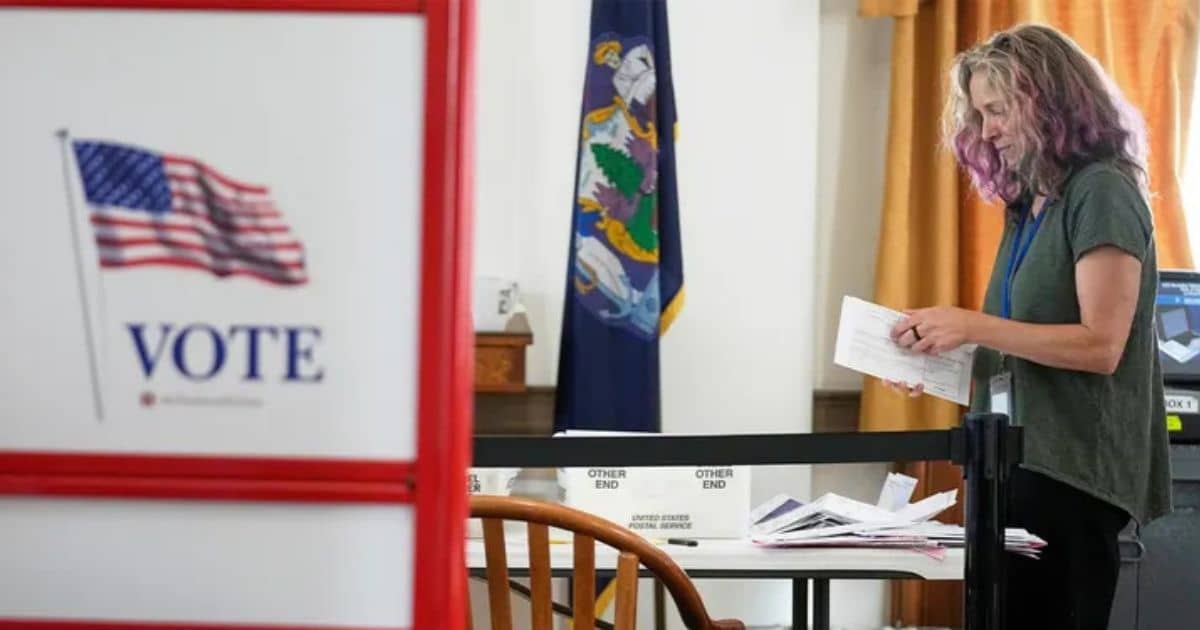
An election official sorts ballots during early voting at a polling site.(Photo Source: AP / Fox News via foxnews.com | Canva Edit & Graphics: BDUS News 24)
As citizens across the United States prepare to cast their ballots with just days remaining until election day, public sentiment highlights a striking trend at the ballot box. Rather than being fueled primarily by strong enthusiasm or support for specific candidates and policy platforms, interviews with citizens nationwide indicate that frustration and opposition toward opposing political forces are acting as the primary catalysts for participation.
Anthropic Publicly Files IPO Prospectus, Noting Strong Revenue Growth and Massive Spending
Control of Congress remains heavily contested as voters weigh their options, with political parties vying for legislative dominance. However, individual perspectives collected from various regions show that personal grievances regarding national leadership, governance style, and current socioeconomic conditions often override positive support for a preferred party.
How Opposition Shapes Choices Among Midterm Voters
For many participating citizens, ballot decisions are deeply intertwined with dissatisfaction over existing policies or executive leadership. For instance, several individuals identifying with or leaning toward the Democratic slate pointed directly to the current administration as their main motivation for supporting congressional challengers. Concerns regarding governance transparency, the rising cost of living, constitutional principles, and overall national direction were frequently cited as driving forces behind their voting intentions.
Interestingly, the phenomenon is not restricted to a single political affiliation. Midterm voters leaning toward Republican candidates similarly expressed deep-seated concerns regarding opposing social policies, economic management, and ideological directions. For some conservative-leaning participants, the primary fear of shifting national policies toward socialism or altering family and social structures served as the ultimate justification for their vote.
Key Issues and Core Motivations at the Ballot Box
Beyond general party politics, individual citizens highlighted specific hot-button topics influencing their decisions as they head toward voting booths. Immigration enforcement and Department of Homeland Security operations remain top-of-mind for voters in border states, while others prioritize constitutional rights such as the Second Amendment. Furthermore, shifting foreign policy stances regarding international conflicts have caused specific demographic segments to alter their traditional voting patterns.
Aston Villa vs Man City: Early Jackson Goal Gives Villa Halftime Lead in Premier League Thriller
Ultimately, these insights suggest that modern political engagement is increasingly defined by push factors rather than pull factors. For a significant portion of the electorate, the upcoming decision is less about celebrating a preferred political vision and more about registering opposition to the current trajectory of the nation. Midterm voters
Savannah Chrisley Announces She Is Pregnant and Engaged to Her Partner Jason