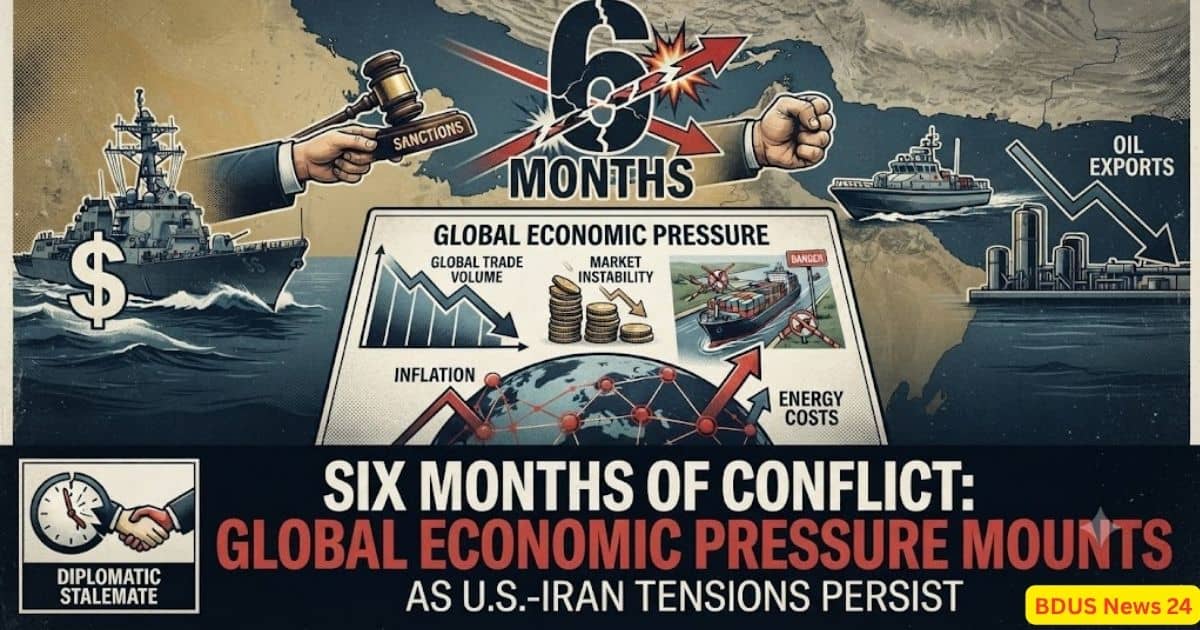
As the conflict between the United States and Iran reaches its critical six-month milestone, international attention remains intensely focused on the geopolitical and economic ramifications unfolding across the Middle East. What initially began with projections of a brief military engagement has evolved into a complex prolonged standoff, significantly impacting global markets, shipping lanes, and international diplomacy.
Economic Asphyxiation and Financial Sanctions
Recent policy declarations from Washington highlight a renewed strategy aimed at the complete economic isolation of Tehran. U.S. Treasury officials have rolled out aggressive financial measures targeting foreign entities and banking networks that continue to facilitate trade with the Iranian government. Financial analysts monitoring global commodities note that these sweeping sanctions are designed to choke off remaining financial lifelines, putting intense pressure on international trade partners.
In response, Iranian officials have vehemently condemned the measures, characterizing the financial restrictions as an aggressive form of economic warfare. Despite heavy economic headwinds, Tehran has sought alternative energy transfer agreements and overland trade routes with regional allies, attempting to mitigate the impact of ongoing port blockades and international trade restrictions.
Maritime Security and the Strait of Hormuz
At the heart of the ongoing crisis is the strategic Strait of Hormuz, a critical chokepoint for global oil supplies. While U.S. Central Command authorities report that international shipping lanes have been systematically cleared of sea mines and that operational momentum is building, commercial shipping traffic remains significantly subdued compared to pre-war volumes. Maritime agencies and international organizations continue to express deep concern over the safety of thousands of seafarers operating in heightened risk zones. Tankers navigating the region frequently rely on coordinated military escorts, keeping global energy markets volatile.
Diplomatic Standoff and Future Outlook
President Donald Trump recently asserted that Iranian leadership is facing extreme pressure and is eager to initiate negotiations. However, formal diplomatic talks remain largely stalled as both sides maintain firm public stances. Regional mediators, including Qatari and Omani diplomats, continue efforts to bridge the gap and encourage a return to dialogue. As international observers watch closely, the combination of strict economic enforcement and persistent maritime friction ensures that the situation remains one of the most pressing geopolitical issues on the global stage, with comprehensive ongoing updates regularly covered by BDUS News 24.
Read the full geopolitical and financial report on BDUS News 24.