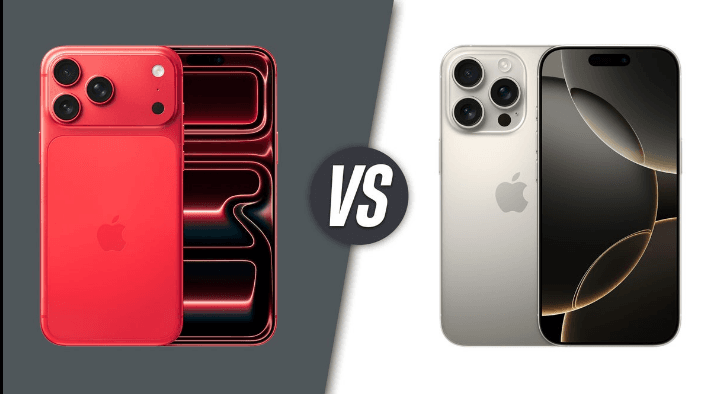
The upcoming iPhone 18 Pro is shaping up to be a massive technological leap forward, offering significant advantages over the iPhone 16 Pro. Driven by advancements in processing power, display technology, and professional-grade camera mechanics, the transition highlights Apple’s major architectural changes over a two-year development cycle.
Key Specification Comparison
| Feature | iPhone 16 Pro | iPhone 18 Pro (Expected) |
| Processor | A18 Pro (3nm) | A20 Pro (2nm) |
| RAM | 8GB | 12GB |
| Display Tech | Super Retina XDR LTPO | Advanced LTPO+ |
| Peak Brightness | 2,000 nits | 3,000 nits |
| Dynamic Island | Standard Size | 35% Smaller |
| Main Camera | 48MP (Fixed f/1.78) | 48MP (Variable f/1.6 to f/4.0) |
| Selfie Camera | 12MP | 18MP with Dual Capture |
| Cooling System | Traditional Graphitic | Vapor Chamber |
| Cellular Modem | Qualcomm X80 | Custom Apple C2 Modem |
| Starting Price | $999 | ~$1,299 |
Design and Display Evolution
While both devices retain a 6.3-inch screen size, the front interface looks notably different. The iPhone 18 Pro reconfigures the Face ID hardware to place the infrared sensor under the display panel. This shrinks the Dynamic Island by roughly 35%, offering a much more immersive viewing experience.
The screen panel itself shifts from standard LTPO to more efficient LTPO+ technology, optimizing energy draw and boosting peak outdoor brightness from 2,000 nits up to 3,000 nits. Additionally, the phone will inherit a highly protective anti-reflective glass coating. On the back, it moves to an aluminum-glass chassis utilizing an integrated vapor chamber cooling system to manage heavy thermal loads under intensive gaming or processing.
Performance and Next-Gen AI Capabilites
The performance gap between these two iterations is substantial:
- The 2nm Jump: The iPhone 16 Pro uses the 3nm A18 Pro chip. The iPhone 18 Pro debuts Apple’s first A20 Pro chip built on TSMC’s cutting-edge 2nm process, providing up to a 30% jump in power efficiency.
- Memory Overhaul: Moving from 8GB of RAM on the iPhone 16 Pro to 12GB of RAM allows the iPhone 18 Pro to run complex, localized AI tasks directly on-device.
- In-House Connectivity: The device drops Qualcomm hardware in favor of the custom Apple C2 5G modem, opening up potential for advanced 5G-over-satellite web browsing capabilities.
A Revolutionary Camera Paradigm
Mobile photography is getting its biggest mechanical update in years. The iPhone 16 Pro relies on a fixed f/1.78 aperture. In contrast, the iPhone 18 Pro introduces a physical variable aperture system adjusting from f/1.6 to f/4.0. This mechanical movement gives users true DSLR-like control over light exposure and natural background bokeh.
The front imaging system is also dramatically improved. The outdated 12MP selfie shooter is replaced by an 18MP sensor with a square format design, allowing seamless software switching between vertical and horizontal frames alongside Dual Capture video support.
Anticipated Release Timeline and Price Hike
The iPhone 18 Pro is expected to be unveiled at Apple’s primary keynote event on September 9, 2026. However, due to surging global RAM component costs and expensive 2nm wafer manufacturing prices, a notable price increase is expected. Industry projections indicate that the base model could start near $1,299, marking a $300 jump from the base cost of the iPhone 16 Pro.
If you want to optimize this post for your website, let me know:
- Do you want me to write SEO meta descriptions and keywords?
- Would you like an added section focusing specifically on how Apple Intelligence AI capabilities differ between these two phones?