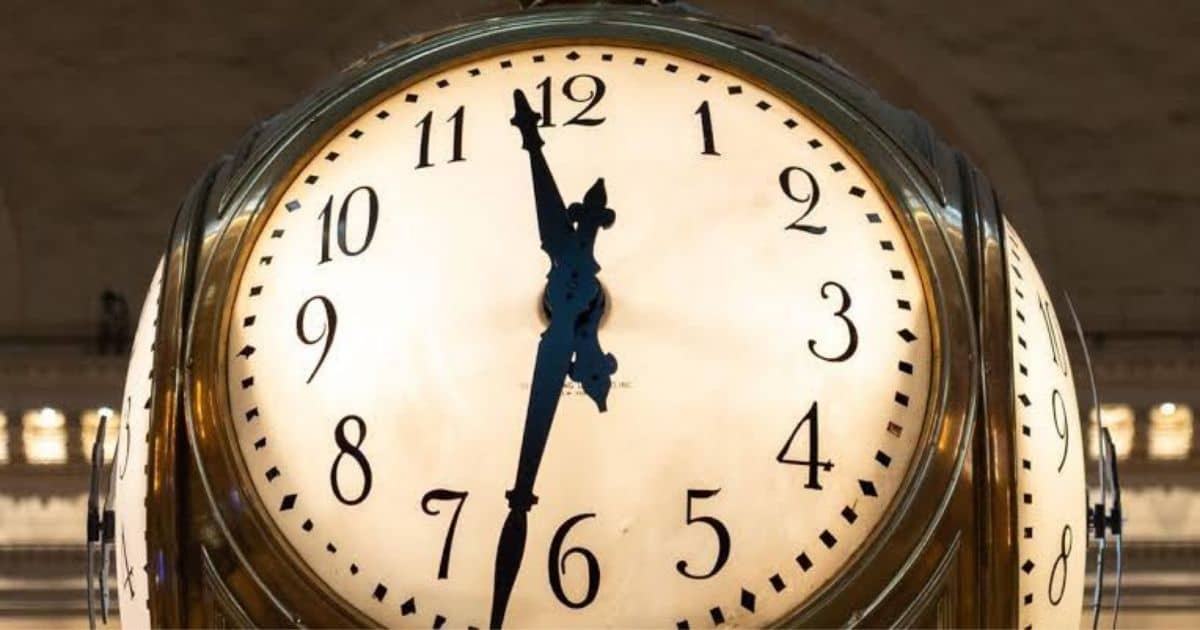
A vintage clock depicting daylight saving time clock change.(Photo Source: UM Legacy Press Ltd / Facebook | Canva Edit & Graphics: BDUS News 24)
Millions of individuals across the United States are set to gain an extra hour of rest this weekend as the seasonal transition officially concludes. Commonly referred to as the semi-annual clock shift, Daylight Saving Time 2026 wraps up during the overnight hours immediately following Halloween celebrations. Most regions across the country will formally “fall back” by turning their clocks backward by sixty minutes when the local time reaches 2:00 a.m. on Sunday.
This annual adjustment marks the transition away from months of extended evening daylight back to standard time. While late-night revelers and partygoers can enjoy an extra hour of festivities or recover with deeper sleep, parents of young children often navigate minor disruptions in toddler and infant sleeping schedules until households fully adjust to the new routine.
History, Mechanics, and Exclusions of Daylight Saving Time 2026
The concept behind this shifting practice involves moving an hour of sunlight from early morning hours into the evening during the spring and summer months. When autumn arrives and days grow shorter, the nation returns to standard time to bring sunlight earlier in morning schedules. Originally adopted in the United States back in 1918 during the First World War to conserve fuel, the system evolved through various congressional adjustments before standardizing dates in recent decades.
It is important to note that not every region participates in this seasonal routine. Daylight Saving Time 2026 is observed nationwide with notable regional exceptions. Hawaii and the majority of Arizona choose not to participate, alongside several U.S. territories including Puerto Rico, Guam, American Samoa, the U.S. Virgin Islands, and the Northern Mariana Islands. Meanwhile, electronic devices such as smartphones configured for automatic updates will shift their digital displays overnight without requiring manual intervention.
Legislative Debates and Future Outlook
The recurring clock change continues to draw significant debate among federal lawmakers. Earlier this year, legislation known as the Sunshine Protection Act advanced through the House and moved to the Senate, seeking to establish permanent year-round daylight saving time. Proponents argue that eliminating the twice-yearly transition would benefit public health, commerce, and evening lifestyle activities.
However, critics and legislative opponents point out past historical precedents where permanent shifts resulted in unusually dark winter mornings that disrupted daily commutes and children walking to school. With pending legislative items facing congressional expiration timelines, the national debate surrounding Daylight Saving Time 2026 and future permanent scheduling remains a major topic of discussion among lawmakers and the public alike.
Savannah Chrisley Announces She Is Pregnant and Engaged to Her Partner Jason