The debate over federal geographic rebrandings continues to heat up across the United States. Following recent executive actions by President Donald Trump targeting major natural landmarks—such as rebranding the Gulf of Mexico to the “Gulf of America” and Lake Ontario to “Lake America”—proposals for further name changes are emerging. As communities and officials react to these sweeping proposals, BDUS News 24 brings you the latest updates on this unfolding political and geographical story. Lake Pennsylvania
The Push From Pennsylvania Lawmakers
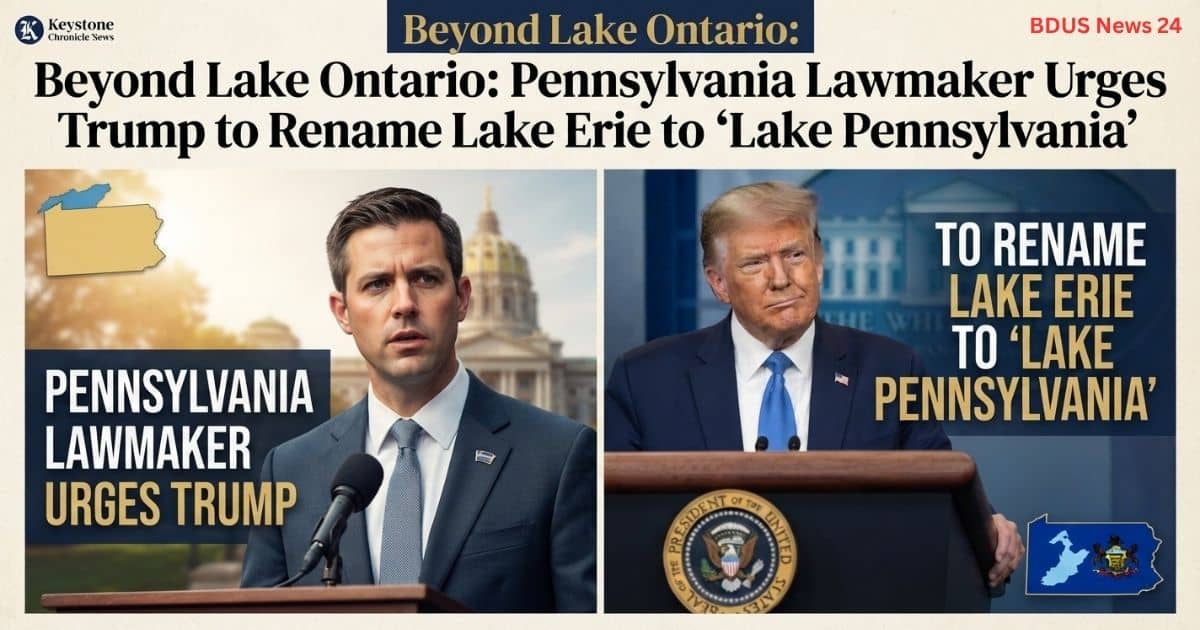
Republican state Representative David Maloney of Pennsylvania has formally requested President Donald Trump to take executive action to rename Lake Erie to “Lake Pennsylvania”. Maloney is currently preparing a legislative resolution calling on the president, Interior Secretary Doug Burgum, and federal lawmakers on Capitol Hill to initiate the formal rebranding process. Proponents of the measure argue that the update is necessary to properly reflect the modern economic and cultural identity of the region.
Highlighting Pennsylvania’s unique geographic position, Maloney noted in a public statement that this body of water serves as the commonwealth’s sole Great Lake. He emphasized that the lake’s modern economy and regional identity are increasingly intertwined with the tourists, local anglers, recreational boaters, and families who visit it. Pointing out regional shoreline distributions—mentioning that neighboring Ohio boasts extensive shoreline, New York borders two other Great Lakes, and Canada shares four separate lakes—Maloney concluded with a sharp appeal: “Pennsylvania has one. Let’s call it Lake Pennsylvania!”
Exploring the Context Behind the Lake Pennsylvania Proposal
To understand the scale of this proposal, it helps to look at the stats of Lake Erie itself. According to data from the Environmental Protection Agency, Lake Erie stands as the smallest among the Great Lakes by total volume, as well as the shallowest. Its extensive watershed supports a population of approximately 12 million individuals, split between roughly 10.5 million residents in the United States and 1.9 million citizens in Canada.
This push follows a wave of similar federal rebranding efforts introduced by the Trump administration. Last month, President Trump signed an executive order changing the federal designation of Lake Ontario to “Lake America”. That decision sparked immediate pushback internationally; Canadian Prime Minister Mark Carney firmly rejected the alteration, stating that Canadians recognize naming reality as calling it Lake Ontario—”then, now and always”. New York Governor Kathy Hochul also issued a blunt message rejecting the “Lake America” designation.
Because executive rebrandings apply exclusively to the U.S. federal government, international bodies, foreign countries like Canada and Mexico, and state entities are not mandated to enforce or acknowledge the changes. Nevertheless, digital infrastructure has begun shifting for domestic users, with applications like Apple Maps and Google Maps updating names to reflect federal orders, sparking separate debates over cartographic compliance. Beyond lakes, the administration has also floated or executed ideas to rename other iconic landmarks, including the Gulf of Mexico, New Mexico, and portions of the global oceans, setting the stage for an ongoing debate over geography, federal authority, and regional identity. Lake Pennsylvania
Read the full report on the push to rename Lake Erie on BDUS News 24